The Artist:
Jacopo Scassellati
Jacopo Scassellati was born in Sassari, Sardinia, Italy in 1989, where he still resides today. His family is originally from Umbria, Italy. Very early on, he displayed a strong propensity for art. Grandson and son of artists, he followed in the footsteps of his grandfather, Franco Scassellati, by strolling through the passages of the ceramist’s laboratory, where he played with clay and colors, transforming them into works that revealed his precocious talent.
Thus, almost predictably, he quite naturally learned the handling process of colors and the secret of ceramists. He attended the classical D. A. Azuni High School in Sassari and obtained his baccalaureate in 2008. During the course of his studies, while working on a project aimed at preserving the Sardinian language, he met writer Gavino Ledda; a friendship that led to the new edition of the novel “Padre Padrone” and other works by Gavino Ledda. In 2012, he graduated from the Accademia di Belle Arti of Sassari. While he likes to express himself with his brushes and colors, he often reverts back to his origins - sculpting clay that brings to mind the Sardinian tradition as well as his classical studies. For him, art is a mental process that is displayed through the manipulation and transformation of materials, which are researched, studied, and experimented with patience and obvious pleasure.
In his creative process, his hands are guided by his experience as an artist-craftsman, from the choice of materials up to the composition of the painting, pursuing an idea resulting from his urges, emotions, and academic studies. He makes his own pigments, like a painter of yesteryear, even though he is constantly seeking new experiences. From there springs his constant artistic metamorphosis, which according to influential art critic Vittorio Sgarbi, makes him "a young man of talent with a rhythm that no longer exists." He was commissioned to create two altarpieces for the Cathedral of Campi, Teramo, Italy, representing the Annunciation and the Deposition.
The experience in the field of Holy Sacred Art has always been a source of great inspiration for the creation of numerous works on commission for several churches. Various sculptural groups of considerable size, such as the Baptismal font of the Cathedral of Sant'Antioco, patron saint of Sardinia; the pictoral cycle of the Baptismal font of the Church of Sant'Orsola in Sassari which includes seven large works; other large works in both painting and sculpture are present at the Church of Sacra Famiglia in Sassari, including the altar and the pictorial cycle of the altar. Numerous works in both painting and sculpture are located in numerous churches in Sardinia. His drawings and works are present in the pastoral letters and book covers of His Excellency Reverend Monsignor Gian Franco Saba, Bishop of Sassari.
His first personal exhibition, which took place in 2008, was entitled Jacopo Giovin Pittore (Jacopo Young Painter), in Spello, Perugia, Italy. For this occasion, the leading Italian art critic, Vittorio Sgarbi, displayed an enthusiastic interest for Jacopo Scassellati’s talent, even comparing him, because of his amazing artistic ascension, to the Grand Masters of the past, having reached the summit of glory at a very young age. The famous critic, fascinated by his art, followed his artistic path and has presented his exhibitions on many other occasions. Scassellati’s works are now part of prestigious collections, both private and public. International interest have allowed his art to be known in various parts of the world, not only in Europe, but ranging from the United States to China, Australia, and New Zealand.
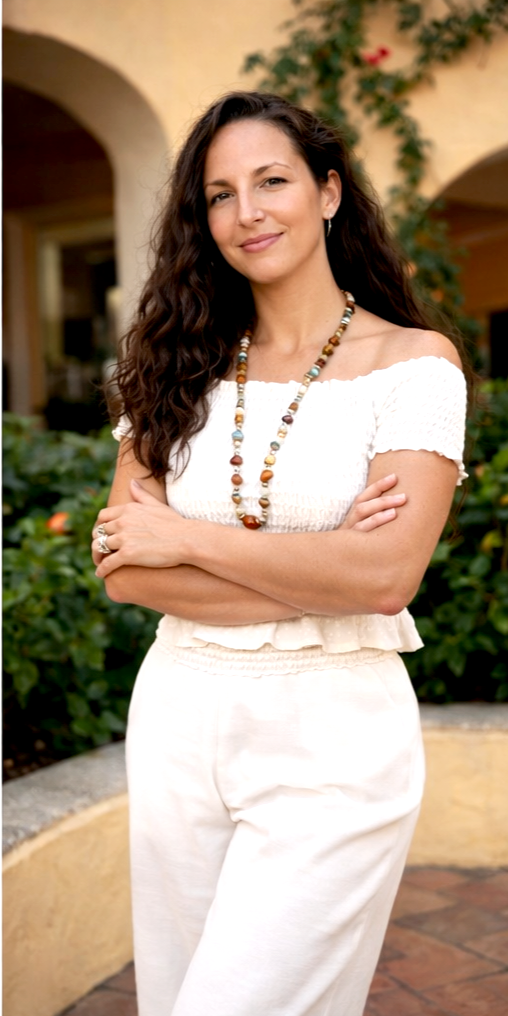
Norman Fine Art
From a young age, I have lived and breathed art. My grandmother, a dedicated painter and collector, introduced me early to a world that most people never enter—one shaped by studios, museums, and the quiet discipline of artists at work.
We traveled widely, visiting major collections and private ateliers, where I learned to see art not simply as decoration, but as a living language passed from one generation to the next. In those spaces, I developed both a love for beauty and a respect for the long traditions that give it meaning. Over time, I became a collector myself, driven by a desire to understand how great works carry the memory of the cultures that created them.
As I began to explore beyond my grandmother’s circle, I encountered the work of Jacopo Scassellati. Visiting his studio in Sardinia and later his exhibition in Atlanta marked a turning point for me. His paintings immediately stood apart—not because they were modern, but because they were rooted in something much older.
Scassellati’s work reflects a continuity with the great European painting traditions—particularly those of the Renaissance and Baroque periods—where myth, history, and human emotion were woven together with technical mastery. His figures and scenes feel as though they belong to a lineage that once defined Western art: narrative, symbolic, and deeply human.
In a time when much contemporary art has turned away from craftsmanship and storytelling, his paintings offer something increasingly rare—a return to the visual language of depth, structure, and meaning. When I first encountered his work, I felt a recognition rather than surprise: the sense of rediscovering a voice that had been absent from the modern conversation. Through his art, a quality of painting that once shaped centuries of culture is present again, not as nostalgia, but as something alive and evolving.
Norman Fine Art is a private gallery and art advisory dedicated to the work of Italian artist Jacopo Scassellati, whose body of work includes church commissions, exhibitions, and private collections across Italy and abroad. We are thrilled to connect collectors to his unique style and talent.